

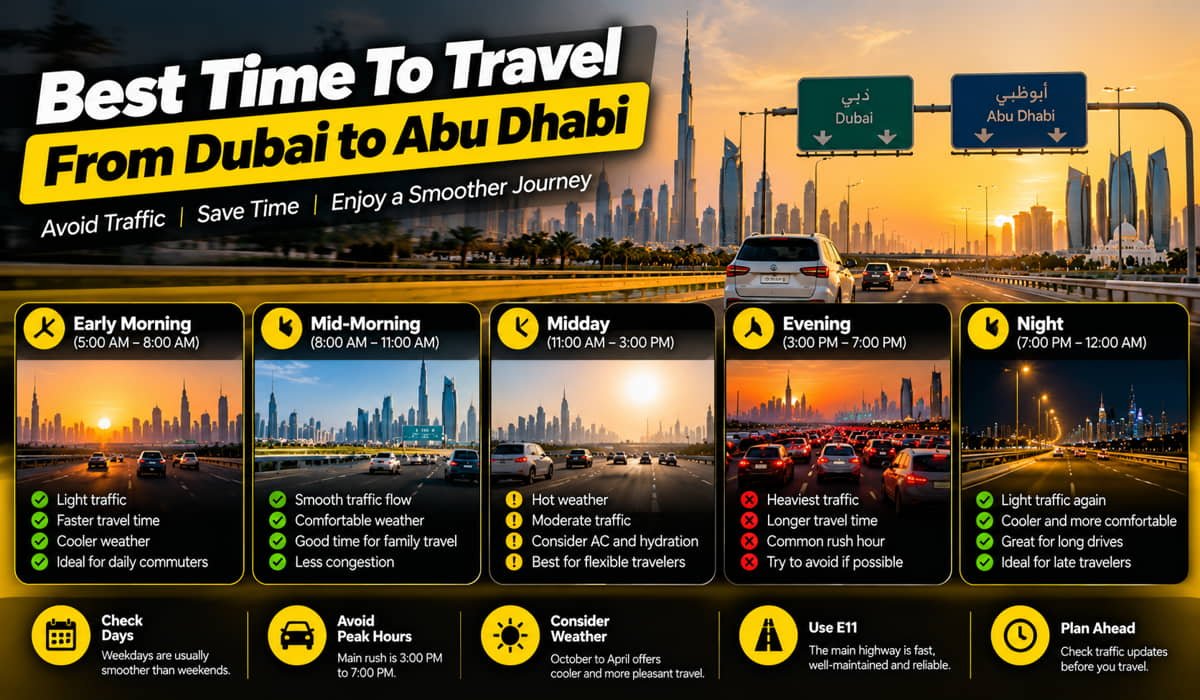
The best time to travel from Dubai to Abu Dhabi depends on your starting location, destination, day of the week, and reason for travelling.
Leaving before busy commuting periods can help you avoid congestion, while travelling at midday or during other quieter times may offer a more predictable journey. However, traffic can change because of road incidents, construction, weather, and special events.
Whether you are driving your own car, taking a taxi, or booking a shared car lift, choosing a suitable departure time can noticeably improve your travel experience. Planning also helps you arrive on time for work, appointments, family visits, and sightseeing.
What Is the Best Time to Travel from Dubai to Abu Dhabi?
For many travellers, an early morning departure or a journey outside the main commuting periods can be a practical choice. Leaving before traffic builds up may help you make better progress on the road, particularly when your starting point is in a busy part of Dubai.
There is no single departure time that is always best. Someone travelling from Dubai Marina to Yas Island may have a different journey from someone leaving Deira for Abu Dhabi Corniche. Current road conditions and the destination within each city also influence the decision.
Consider these general departure options:
- Early morning: Can suit travellers who want to reach Abu Dhabi before the main daytime activities begin, provided visibility and road conditions are safe.
- Midday: May be suitable for flexible travellers who can avoid the busiest commuting periods.
- Afternoon: Can work for some journeys, but traffic may increase as the working day progresses.
- Evening: May involve additional commuting traffic, especially around busy city roads.
- Late night: Can offer quieter roads, but driver alertness, visibility, and transportation availability need consideration.
Check live traffic before deciding when to leave. Typical traffic patterns are useful for planning, but they cannot predict every delay.
Best Time to Leave Dubai in the Morning
An early morning departure can be a good option for people who want to reach Abu Dhabi before the day becomes busy. It may also suit office commuters, business travellers, and visitors with morning appointments.
The main consideration is the direction and location of traffic. Dubai’s roads experience commuter movement as people travel to work and school. The time required to leave a particular neighbourhood and reach a major highway can therefore affect the overall journey.
If you have an early meeting in Abu Dhabi, plan your departure around your required arrival time rather than relying on the estimated highway journey alone. Include time for reaching the main road, possible congestion, and finding your destination after entering Abu Dhabi.
Early travel can also involve reduced visibility during foggy weather, particularly in cooler months. Check official weather alerts and road conditions before setting off.
Best Time to Travel During the Afternoon
Midday and early afternoon can be practical departure periods for travellers with flexible schedules. They may avoid some of the morning office commute and allow you to reach Abu Dhabi before evening activities or appointments.
However, afternoon conditions are not always quiet. School-related traffic, local shopping activity, roadworks, and traffic around commercial areas can affect different parts of the route.
The timing of your arrival also matters. If you leave Dubai in the afternoon but need to reach a busy business district near the end of the working day, you may encounter congestion closer to your destination.
Check the route from your exact pickup point to your final destination. A journey that looks clear on the highway may still involve delays on the approach roads.
Best Time to Travel in the Evening
Evening travel can be suitable for people visiting Abu Dhabi after work or attending an event, but it requires careful planning. Commuters leaving offices, local traffic, and visitors heading towards shopping or entertainment areas can influence road conditions.
The direction of travel also matters. Traffic moving out of Dubai may behave differently from traffic entering the city, and the conditions around your destination can be just as important as those on the intercity highway.
If you have a fixed arrival time, avoid planning your departure too close to the appointment. Check live traffic and allow additional time if the route shows congestion.
Dubai to Abu Dhabi Traffic Patterns Throughout the Day
Traffic between Dubai and Abu Dhabi changes throughout the day because of commuting, business travel, leisure trips, and local road activity.
It is useful to understand general traffic patterns, but remember that they are not fixed schedules. An accident, road closure, event, or weather warning can change the journey even during a normally quieter period.
Early Morning Traffic
Early morning travel can be useful for people who want to reach their destination before daytime activities become busy. Some travellers prefer leaving early to avoid spending too much time on city roads during the main commuting period.
However, an early departure does not guarantee a clear journey. Fog can reduce visibility, particularly during certain weather conditions, and drivers may need to adjust their speed and following distance.
Check the weather forecast before travelling. If visibility is poor, prioritise safe driving over maintaining your planned arrival time.
Morning Rush Hour
Morning commuting creates additional movement on roads around residential communities, business districts, and school areas.
The traffic you encounter depends on where you begin your journey. For example, leaving from a busy central Dubai neighbourhood may involve more local congestion than starting from an area closer to the intercity road.
Abu Dhabi’s DARB toll system also identifies a morning peak charging period from 7 AM to 9 AM, Monday through Saturday. This is an official toll schedule, not a guarantee that the entire Dubai–Abu Dhabi route experiences its heaviest traffic during those exact hours.
If you are travelling during the morning, check both the roads around your departure point and the route towards your Abu Dhabi destination.
Midday and Afternoon Traffic
Traffic may become more manageable outside the main commuting periods, making midday a practical option for travellers who do not have strict office schedules.
This period can suit family visits, flexible business appointments, and sightseeing trips. However, conditions vary according to the day and the areas you need to cross.
A road may be moving smoothly between the two cities while a particular junction or destination approach remains busy. Check the complete journey rather than looking only at the highway section.
Evening Rush Hour
Evening commuting can affect travel conditions as employees finish work and move between business districts, residential areas, and nearby communities.
Abu Dhabi’s DARB system has an evening peak charging period from 3 PM to 7 PM, Monday through Saturday, under the tariff schedule introduced in September 2025. This provides useful context about peak-period road use in Abu Dhabi, but it should not be treated as a universal traffic forecast for the full intercity journey.
If you are leaving Dubai during the afternoon or evening, check the traffic around your pickup location, the highway, and your destination. A little flexibility can help you avoid unnecessary delays.
Late-Night Travel
Late-night travel may offer lighter traffic on some parts of the route because fewer people are commuting. This can suit passengers travelling after an evening event or people with flexible schedules.
However, quieter roads do not automatically make late-night driving the safest option. Driver fatigue, reduced visibility, and the possibility of fog still matter.
Drivers should be alert, take breaks when necessary, and avoid continuing if they feel tired. Passengers using shared or private transport should also confirm that the service operates at their required departure time.
Best Days to Travel from Dubai to Abu Dhabi
The day of travel can influence the type of traffic you encounter. Weekdays often involve office commuting, while weekends may bring more leisure and family travel. Public holidays and major events can create different patterns altogether.
Travelling on Weekdays
Weekdays are often important for employees, business travellers, and people attending scheduled appointments in Abu Dhabi.
Morning and evening commuting activity can affect departure and arrival times. If you travel regularly, observe the conditions on your usual route and identify periods that work best for your schedule.
For daily commuters, consistency is useful. A departure time that allows enough flexibility for occasional delays is generally more practical than planning to arrive at the exact start of a shift with no extra time.
Travelling on Fridays
Friday travel patterns may differ from other working days because office schedules, school routines, and leisure activities can vary.
Some people travel earlier for family visits or weekend plans, while others leave later in the day. Traffic depends on the time, route, and events taking place around the cities.
Do not assume Friday roads will always be quieter. Check the expected conditions before departure, especially if you are travelling to a popular attraction or attending a scheduled event.
Travelling on Saturdays and Sundays
Weekend travel can involve family outings, shopping trips, social visits, and sightseeing. These journeys may create additional traffic around popular destinations and access roads.
Saturday and Sunday conditions can differ depending on the time of day and local events. A morning trip may have different conditions from a late afternoon return journey.
If you are planning a weekend visit to Abu Dhabi, consider both directions. It is easy to focus on reaching your destination while overlooking the traffic that may affect your return to Dubai.
Travelling During UAE Public Holidays
Public holidays can create unusual travel patterns. Long weekends, national celebrations, school breaks, and major events may increase the number of people travelling between emirates.
Some roads may become busier near popular attractions, shopping destinations, and event locations. Others may be quieter than usual because offices are closed.
Plan ahead if your trip falls during a public holiday. Check official announcements, road updates, and live navigation information before setting off. If you are using a shared car lift, confirm your seat and departure arrangements early because transport demand and schedules may differ from ordinary weekdays.
How Long Does It Take to Travel from Dubai to Abu Dhabi?
The journey duration depends on your exact starting point, destination, selected route, traffic, weather, and any stops along the way.
A trip between central areas of both cities will not necessarily take the same time as a journey between Dubai’s outer communities and an Abu Dhabi destination farther from the main highway.
For a useful estimate, enter your actual pickup and drop-off locations into a navigation application. Treat the displayed time as an estimate and check it again before departure.
Distance Between Dubai and Abu Dhabi
Dubai and Abu Dhabi are connected by major highways, but the distance depends on the locations you choose.
For example, travelling from Dubai Marina to Yas Island involves a different route and distance from travelling from Deira to Abu Dhabi Corniche. Even when two journeys use the same main highway, their total travel times can differ because of the roads used at either end.
This is why a single distance or journey duration should not be treated as accurate for every traveller.
Factors That Affect Travel Time
Several factors can change how long the journey takes:
- Traffic congestion: Busy commuting periods and local bottlenecks can slow progress.
- Road incidents: Accidents, breakdowns, and temporary closures may cause delays.
- Roadworks: Construction and maintenance can affect lane availability and route choices.
- Weather: Fog, rain, and reduced visibility may require slower and more cautious driving.
- Route selection: The best route depends on your starting point, destination, and current road conditions.
- Additional stops: Passenger pickups, fuel stops, and rest breaks add to the total journey time.
Traffic data can help explain why journey times vary. TomTom’s 2025 traffic report recorded different congestion levels and rush-hour speeds for Dubai and Abu Dhabi, showing that conditions within each city can affect travel efficiency.
How Much Extra Time Should You Allow?
The amount of extra time depends on how important your arrival time is and how predictable your journey needs to be.
For a casual visit, a small delay may not matter. For a job interview, medical appointment, business meeting, or airport connection, arriving late can create a much bigger problem.
Consider the following when planning:
- Check the estimated journey time before leaving.
- Review live traffic close to departure.
- Consider the time needed to reach the highway from your pickup location.
- Allow for parking, security checks, or walking to the final destination.
- Add a suitable time buffer for appointments and other fixed commitments.
There is no single buffer that works for every trip. A traveller with a flexible sightseeing schedule may need less planning than someone who must reach an appointment at a specific time.
Which Route Should You Take from Dubai to Abu Dhabi?
The best route depends on where you start in Dubai, where you need to go in Abu Dhabi, and the traffic conditions at the time of travel.
Two important road connections between the cities are E11 and E311. The E11, also known as Sheikh Zayed Road, is a major intercity connection. E311, known as Sheikh Mohammed Bin Zayed Road, provides another option for certain starting points and destinations.
Neither road is automatically the fastest for every journey. A route that saves time for someone travelling from one Dubai neighbourhood may be less suitable for someone starting elsewhere.
Main Road Connections Between Dubai and Abu Dhabi
E11 (Sheikh Zayed Road) is a major highway connection between Dubai and Abu Dhabi. It serves many areas along the route and may be convenient for travellers whose starting and ending locations have suitable access to it.
E311 (Sheikh Mohammed Bin Zayed Road) is another important road connection. Depending on your starting location and current traffic, it may provide a useful alternative for reaching the intercity route.
The best option depends on the full journey rather than the road name alone. Consider the time required to reach each highway, current congestion, and the final approach to your destination.
How to Choose a Route Based on Traffic
Navigation applications such as Google Maps and Waze can help compare route options and identify current congestion.
Before leaving:
- Enter your exact pickup and drop-off locations.
- Compare the estimated time for available routes.
- Check for reported accidents, roadworks, and closures.
- Review the route again if traffic changes.
- Follow road signs and official traffic instructions.
Do not switch routes simply because an alternative looks shorter on the map. Consider the full estimated journey time and whether the alternative road is suitable for your destination.
Why Your Pickup and Drop-Off Locations Matter
Your starting and ending points can make a significant difference to the journey.
Someone leaving from Dubai Marina may reach a main highway differently from someone starting in Deira or Downtown Dubai. Similarly, reaching Yas Island may involve a different approach from travelling to Abu Dhabi Corniche, Al Reem Island, or Mussafah.
This also matters when booking shared transportation. A car lift with several pickup points may take longer than a direct private journey because the driver needs to collect other passengers before continuing.
When planning your departure, use the actual pickup and drop-off locations rather than relying on a general Dubai to Abu Dhabi estimate.
Best Time to Travel Based on Your Journey Purpose
The most suitable departure time depends on what you need to do after reaching Abu Dhabi. A daily commuter, tourist, family, and business traveller may have very different priorities.
Best Travel Time for Daily Office Commuters
Employees travelling regularly between Dubai and Abu Dhabi should plan around their office start and finish times.
If you must reach work at a fixed time, consider your complete journey, including pickup, highway travel, and the final drive to your workplace. Leaving too close to your shift start can make even a small delay stressful.
Regular commuters may benefit from a consistent departure arrangement. If you share a car lift with colleagues or other passengers, confirm the pickup schedule and allow enough time for everyone to board.
For people making this journey frequently, a shared car lift from Dubai to Abu Dhabi for daily commuters can be a useful option to explore.
Best Travel Time for Tourists and Sightseers
Tourists should choose a departure time based on attraction opening hours, hotel arrangements, and the number of places they want to visit.
An early departure may help you start sightseeing sooner and leave more time for activities. However, check the opening hours and entry arrangements of your planned destinations before travelling.
If you have multiple stops, consider the time needed to move between attractions within Abu Dhabi. Do not plan the day around highway travel time alone.
Also decide when you want to return to Dubai. A well-planned outbound journey can still become inconvenient if you leave your return trip until a busy period without checking traffic.
Best Travel Time for Family Visits
Families may prefer a departure time that allows everyone to travel comfortably without rushing.
Consider children’s routines, meal times, luggage, and the needs of older passengers. An early departure may suit some families, while others may prefer travelling after breakfast or later in the day.
If you are booking shared transportation, confirm the pickup arrangement and whether the vehicle has enough space for your group and luggage. A private transfer may be more suitable when your family needs exclusive space or specific pickup arrangements.
Best Travel Time for Important Appointments
For interviews, business meetings, medical appointments, and other fixed commitments, reliability should be the main priority.
Check the estimated travel time before the journey and again shortly before departure. Allow time for city traffic, possible road delays, parking, and reaching the exact building or office.
If the appointment is particularly important, consider travelling earlier and spending some time near the destination rather than risking a late arrival.
Choose transportation that matches your schedule and confirm the booking details in advance.
How to Choose the Best Transportation for Your Journey
Departure time is only one part of travel planning. Your budget, passenger count, luggage, flexibility, and preferred level of privacy also influence which transportation option is suitable.
Travelling by Personal Car
A personal car gives you control over departure time, route, stops, and return arrangements.
This option can suit people who travel regularly, need to visit several locations, or prefer to manage their own schedule.
However, you are responsible for driving, fuel, applicable tolls, parking, and vehicle maintenance. You must also monitor traffic and road conditions throughout the journey.
Travelling by Taxi or Private Transfer
A taxi or private transfer can suit travellers who want direct transportation without driving themselves.
This option may be useful for airport journeys, business appointments, family visits, and trips involving luggage. A pre-booked private transfer can also provide a confirmed pickup arrangement, depending on the provider’s terms.
Before booking, check the fare, pickup location, vehicle type, waiting arrangements, and any additional charges. The total cost may depend on the provider, route, and travel time.
Travelling by Bus
Bus travel can be suitable for passengers who prefer scheduled public transportation and do not need a private vehicle.
Intercity buses operate from designated boarding points, so passengers should plan how to reach the departure station and continue from the arrival station to their final destination.
Check the current schedule, ticket availability, boarding location, and journey information through the relevant transport operator before travelling. The bus schedule may not match every work shift or appointment, and last-mile transportation may be needed.
Travelling by Shared Car Lift or Carpool
A shared car lift allows passengers travelling in the same direction to share a vehicle and coordinate their journey.
This option can suit regular commuters, employees, and passengers who want an alternative to driving alone. Depending on the arrangement, passengers may share a scheduled departure and contribute toward the journey cost.
The pickup schedule is important. A shared ride may involve collecting other passengers before heading towards Abu Dhabi, which can affect the total journey time. Confirm the departure time, pickup location, drop-off point, and expected arrival arrangements before booking.
If you travel regularly, explore tips for daily carpool commuters to understand how to plan shared journeys more effectively.
When Is a Private Car Lift More Suitable?
A private car lift may be more appropriate when you prefer exclusive vehicle space, direct pickup, or an arrangement built around your travel schedule.
It can suit families, business travellers, passengers with luggage, or people who do not want to share the vehicle with other passengers.
However, the level of flexibility depends on the provider’s booking terms. Confirm the pickup time, route, waiting arrangements, vehicle, and total price before making a reservation.
If you are comparing the two formats, read about shared and private car lift options to understand the differences.
Practical Tips for Planning a Dubai to Abu Dhabi Journey
Good planning helps reduce uncertainty, whether you are driving yourself or arranging shared transportation.
Check Live Traffic Before Departure
Do not rely only on general rush-hour information. Traffic can change because of accidents, roadworks, weather, and special events.
Use Google Maps or Waze to check your route shortly before leaving. Compare the available routes and review the estimated arrival time.
For regular commuters, observing traffic on different days can also help identify departure periods that suit their schedules.
Plan Around Weather and Road Conditions
Weather can affect travel conditions, especially when fog or rain reduces visibility.
The UAE’s National Centre of Meteorology provides weather updates and alerts. Check its information before travelling, particularly during periods when fog is expected.
During fog, reduce speed, maintain a safe distance, and follow official road instructions. If visibility becomes dangerously poor, prioritise safety instead of trying to maintain your planned arrival time.
Plan Fuel, Tolls, and Rest Stops
If you are driving your own vehicle, check the fuel level before departure and plan any necessary stops.
Consider the toll charges that may apply to your route and check the current rules through the relevant authorities. Abu Dhabi’s DARB toll schedule, for example, has defined peak charging periods, so travellers should check the latest official information before setting off.
For longer or tiring journeys, plan suitable rest stops rather than continuing when you feel fatigued.
Confirm Your Transportation and Pickup Time
Passengers using shared transportation should confirm their arrangements before the travel date.
Check:
- Exact pickup location.
- Agreed departure time.
- Expected drop-off point.
- Whether other passengers will be collected.
- Luggage and seating arrangements.
- Expected arrival time.
- Return journey arrangements, if required.
For an early morning trip, confirm the booking in advance instead of assuming a vehicle will be available at short notice.
Frequently Asked Questions About Travelling from Dubai to Abu Dhabi
What is the best time to travel from Dubai to Abu Dhabi?
Early morning or a period outside the main commuting hours may suit many travellers. However, the best time depends on your starting point, destination, day, and live traffic conditions. Check your route before departure.
What time is rush hour between Dubai and Abu Dhabi?
Commuting activity can affect roads during weekday mornings and evenings, but exact congestion periods vary by location and direction. Abu Dhabi’s DARB toll peak periods are 7 AM to 9 AM and 3 PM to 7 PM, Monday through Saturday. These are toll charging hours, not a guaranteed timetable for traffic across the entire intercity route.
Is it better to travel from Dubai to Abu Dhabi in the morning or evening?
Morning travel may suit people who want to reach Abu Dhabi early, while evening travel may be more convenient after work or other activities. Both periods can involve commuting traffic, so compare live route conditions before deciding.
How long does it take to drive from Dubai to Abu Dhabi?
Travel time depends on the exact starting point, destination, route, traffic, weather, and stops. Use a navigation application with your actual pickup and drop-off locations for a more useful estimate.
Which day is best for travelling from Dubai to Abu Dhabi?
There is no single best day for every traveller. Weekdays involve commuting activity, while weekends and public holidays may bring leisure and event-related traffic. Check the conditions for your intended travel date.
Is weekend traffic heavy between Dubai and Abu Dhabi?
Weekend traffic can increase around popular destinations, shopping areas, and leisure locations, but conditions vary by day and time. Check the complete route before leaving.
Is it better to travel late at night between Dubai and Abu Dhabi?
Late-night travel may involve less commuting traffic, but drivers should consider fatigue, visibility, and weather conditions. Passengers should also confirm that their chosen transportation service operates at that time.
Which route is best for travelling from Dubai to Abu Dhabi?
E11 (Sheikh Zayed Road) and E311 (Sheikh Mohammed Bin Zayed Road) are important road connections. The best option depends on your pickup location, destination, and current traffic. Compare route estimates before departure.
How can I check traffic before travelling from Dubai to Abu Dhabi?
Use Google Maps or Waze to check live traffic, estimated arrival time, road incidents, and alternative routes. Check the information again close to departure because conditions can change.
Is a shared car lift suitable for daily travel between Dubai and Abu Dhabi?
A shared car lift can suit regular commuters who are comfortable with an agreed pickup schedule and sharing the vehicle with other passengers. Confirm the departure time, pickup points, drop-off location, and expected journey duration before arranging regular travel.
How much extra time should I allow for an important appointment in Abu Dhabi?
The required buffer depends on your starting point, appointment location, traffic, and the consequences of arriving late. Check the estimated journey time, account for local roads and parking, and leave additional time rather than relying on the shortest navigation estimate.
Plan Your Dubai to Abu Dhabi Journey at the Right Time
Choosing the best time to travel from Dubai to Abu Dhabi involves more than avoiding rush hour. Your starting location, destination, weekday, weather, and reason for travelling all influence the most suitable departure time.
An early start may help with morning appointments, while midday travel can suit people with flexible schedules. Evening and weekend journeys require attention to local traffic and events. Whatever time you choose, check live road conditions and allow enough time for your plans.
Your transportation choice also matters. A personal car provides control over the journey, while buses, taxis, shared car lifts, and private transfers offer different levels of convenience and flexibility.
If a shared or private car lift suits your schedule, explore the available car lift options from Dubai to Abu Dhabi and confirm the pickup time and travel arrangements before your journey.
